

What is degenerative disc disease? Degenerative disc disease is a condition where the spinal discs between your vertebrae gradually change and wear down over time. These discs act like cushions between the bones in your spine, helping absorb shock and allowing your spine to move. As we age, the discs can lose some of their water content and become less flexible. This can cause the discs to become thinner and develop small tears or other changes. While these changes are a normal part of aging for many people, they can sometimes contribute to back or neck pain, stiffness, and other symptoms.
Degenerative disc changes can happen for several reasons, including natural aging, previous injuries, repetitive stress, and other factors. Not everyone with degenerative disc changes experiences pain, and the severity of symptoms can vary from person to person. Some people may have significant changes visible on imaging with very little discomfort, while others may experience persistent pain that affects their everyday activities.
Understanding Degenerative Disc Changes
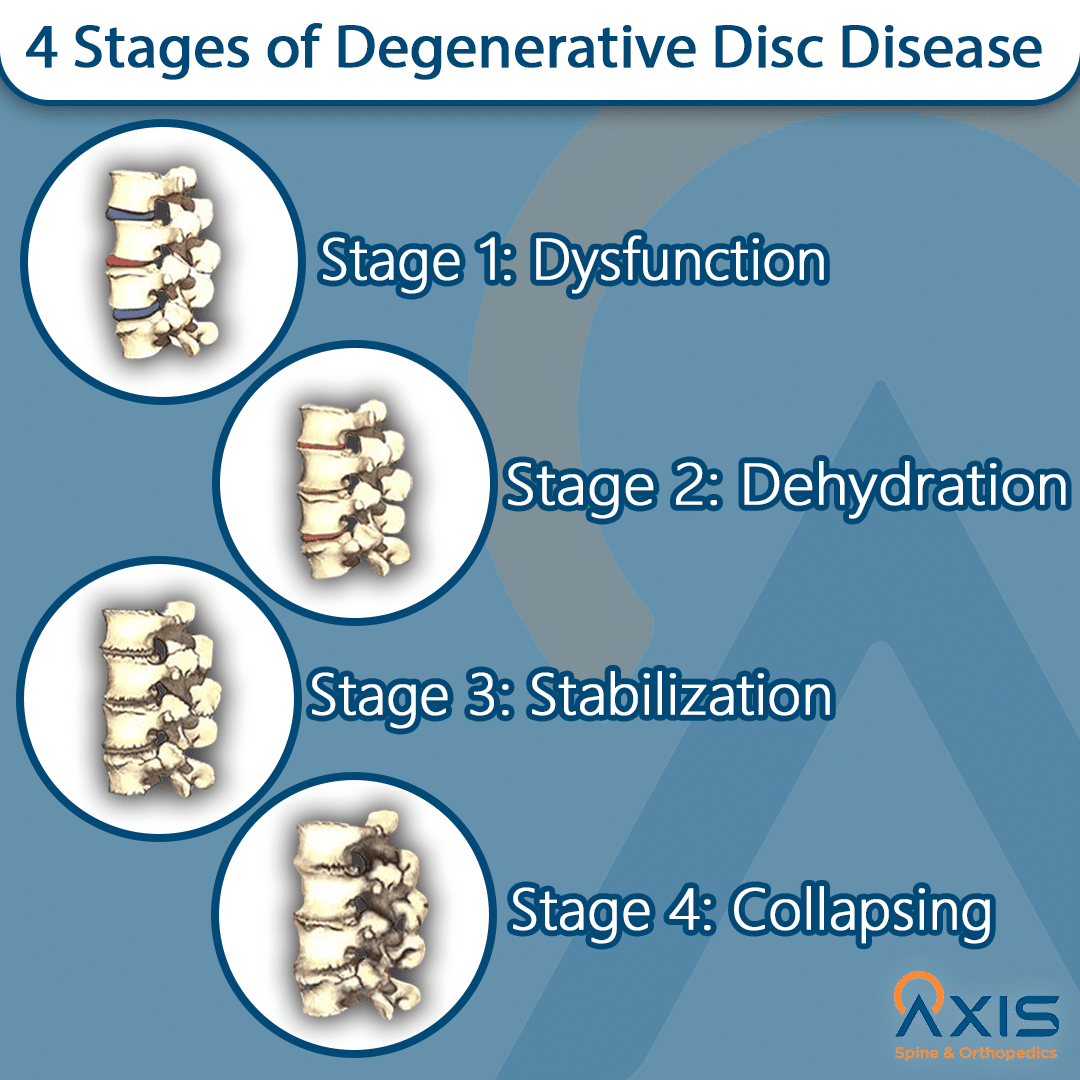
While degenerative disc disease doesn’t follow the exact same progression for everyone, disc degeneration is often described in different phases:
1. Early Degeneration:
In the early stages, spinal discs may begin losing some of their water content and elasticity. Small tears can develop in the outer portion of the disc, and the disc may begin to lose some of its ability to absorb shock between the vertebrae.
2. Disc Height and Flexibility Changes:
As degeneration progresses, continued changes to the disc can lead to a reduction in disc height and flexibility. This can change how the vertebrae move and may place additional stress on the surrounding joints, muscles, and other structures of the spine.
3. Advanced Degenerative Changes:
In more advanced cases, the body may respond to changes in the spine by developing bone spurs, also known as osteophytes. These changes can contribute to stiffness and, depending on their location, may place pressure on nearby nerves. Some patients may also experience chronic pain or changes in spinal stability.
4. Severe Degeneration:
In severe cases, significant loss of disc height and other degenerative changes can occur. The space between the vertebrae may become substantially reduced, potentially increasing stress on the surrounding structures. Treatment at this stage depends on the individual’s symptoms, physical examination, imaging, and overall health. Surgery is not automatically required, but it may be considered when significant symptoms continue despite appropriate nonsurgical treatment or when certain structural or neurological problems are present.
Treatment for degenerative disc disease can vary depending on the severity of the condition and the symptoms you are experiencing. Options may include physical therapy, medications, activity modification, injections, and, in some cases, surgery. The goal is to find the appropriate treatment for your specific condition and help you return to your normal activities.
If you’re experiencing persistent back or neck pain, stiffness, numbness, weakness, or other symptoms that may be related to degenerative disc disease, don’t ignore them. Axis Spine & Orthopedics can evaluate your symptoms and help determine what may be causing your discomfort and which treatment options may be appropriate for you. Contact us today to schedule a consultation and take the next step toward getting BACK to It.