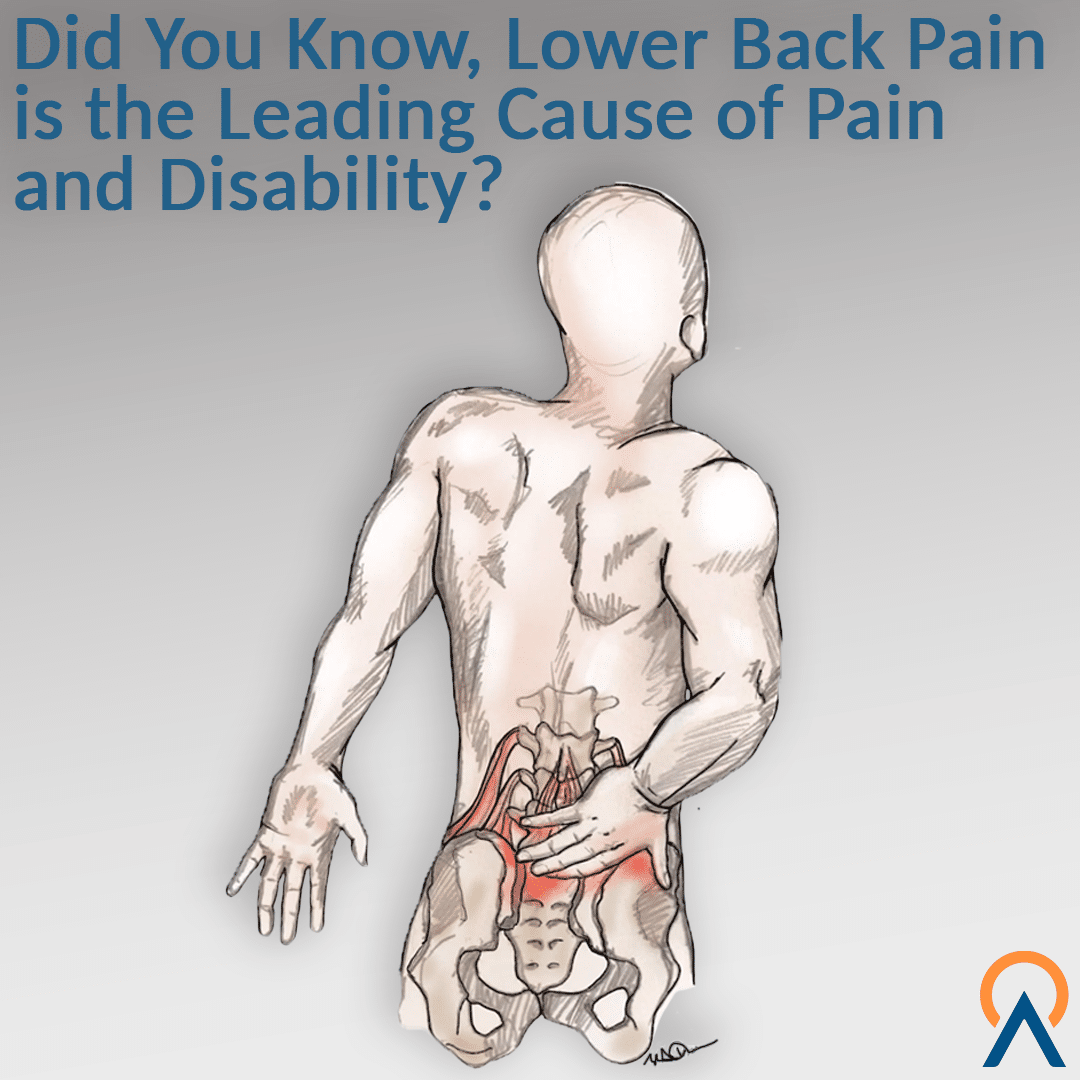
Did you know that low back pain is the leading cause of disability worldwide? More than 600 million people around the world experience low back pain, making it one of the most common health conditions people deal with. Low back pain can affect people of all ages and activity levels, and it can range from mild, temporary discomfort to persistent pain that interferes with everyday life. While some back pain may improve with time and conservative treatment, persistent or worsening symptoms should not simply be ignored.
There are many different factors that can contribute to low back pain. Poor posture, excess weight, improper lifting techniques, muscle or ligament strain, repetitive movements, and prolonged sitting can all place additional stress on the structures that support your lower back. Other causes can include conditions affecting the spine, such as herniated discs, spinal stenosis, spondylosis, or spondylolisthesis. In some cases, irritation or compression of a spinal nerve can also cause pain, numbness, tingling, or weakness that travels from the lower back into the buttocks or legs. Because there are so many potential causes, understanding where your pain is coming from is an important part of determining the appropriate treatment.
There are also steps you can take to support your lower back and overall spine health. Staying physically active, maintaining a healthy weight, practicing proper lifting techniques, taking breaks from prolonged sitting, and strengthening the muscles that support your spine can all help promote better movement and function. However, if your pain continues despite making these changes or begins affecting your ability to work, exercise, sleep, or participate in everyday activities, it may be time to seek professional evaluation.
Here at Axis Spine and Orthopedics, we can help you understand the potential cause of your back pain and discuss treatment options based on your individual needs. Depending on the condition, treatment may include non-surgical options such as physical therapy, medications, injections, or other conservative approaches. When appropriate, minimally invasive spine surgery may also be considered. Our goal is to help you reduce pain, improve your mobility, and get back to doing what you love. Call Axis Spine and Orthopedics or visit our website to schedule a consultation today and get #GetBACKtoIt!