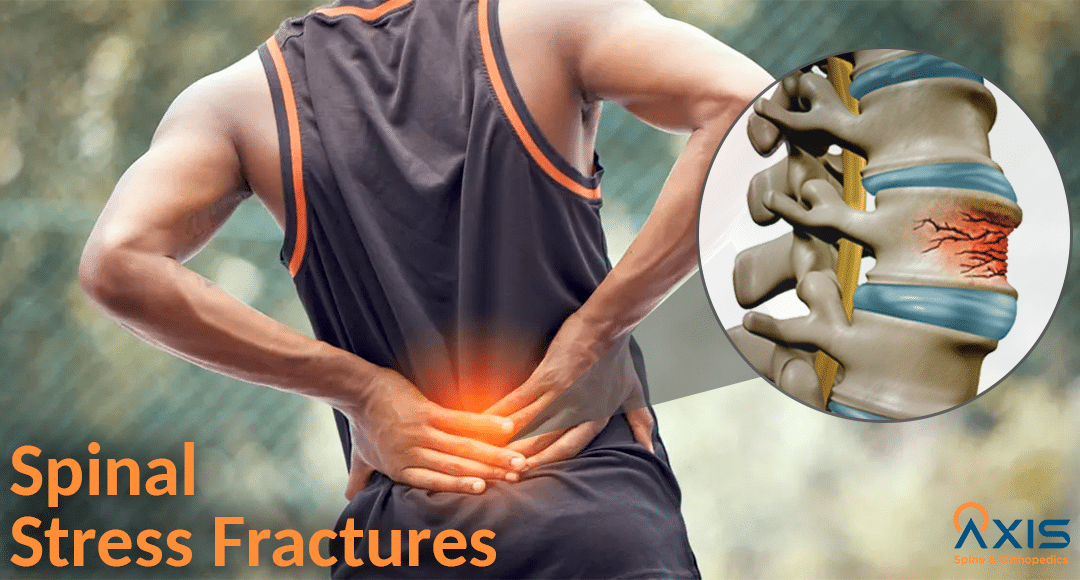
First, we start with non-surgical forms of treatment. The very first step in the treatment plan is resting and modifying any activity that’s causing the pain and discomfort. Sometimes this is accompanied by a brace to make sure the lower back and/or fractured area has support and restricts you from bending in a way that will cause more damage and pain to your body. Once the pain level comes down, targeted physical therapy is recommended to strengthen the core and restore lower back muscles to support your spine. During this process over the counter pain relivers can also help lessen the pain levels you may be experiencing.
If non-surgical methods don’t alleviate or help with the pain, then we would recommend surgery. This is rare and not the first recommendation. If pain proceeds after non-surgical methods, then it’s likely that the stress fracture has fully progressed into spondylolisthesis where the cracked/fractured area slips over the bone beneath it. The suggested surgical procedure is a spinal fusion using screws and rods to stabilize the section of your spine that has fractured and shifted. This will permanently keep your spine in place and will lessen the pain over time, once healed properly.
If you are experiencing anything like this, please feel free to contact Axis Spine and Orthopedics, so we can help you get back to doing what you love!