
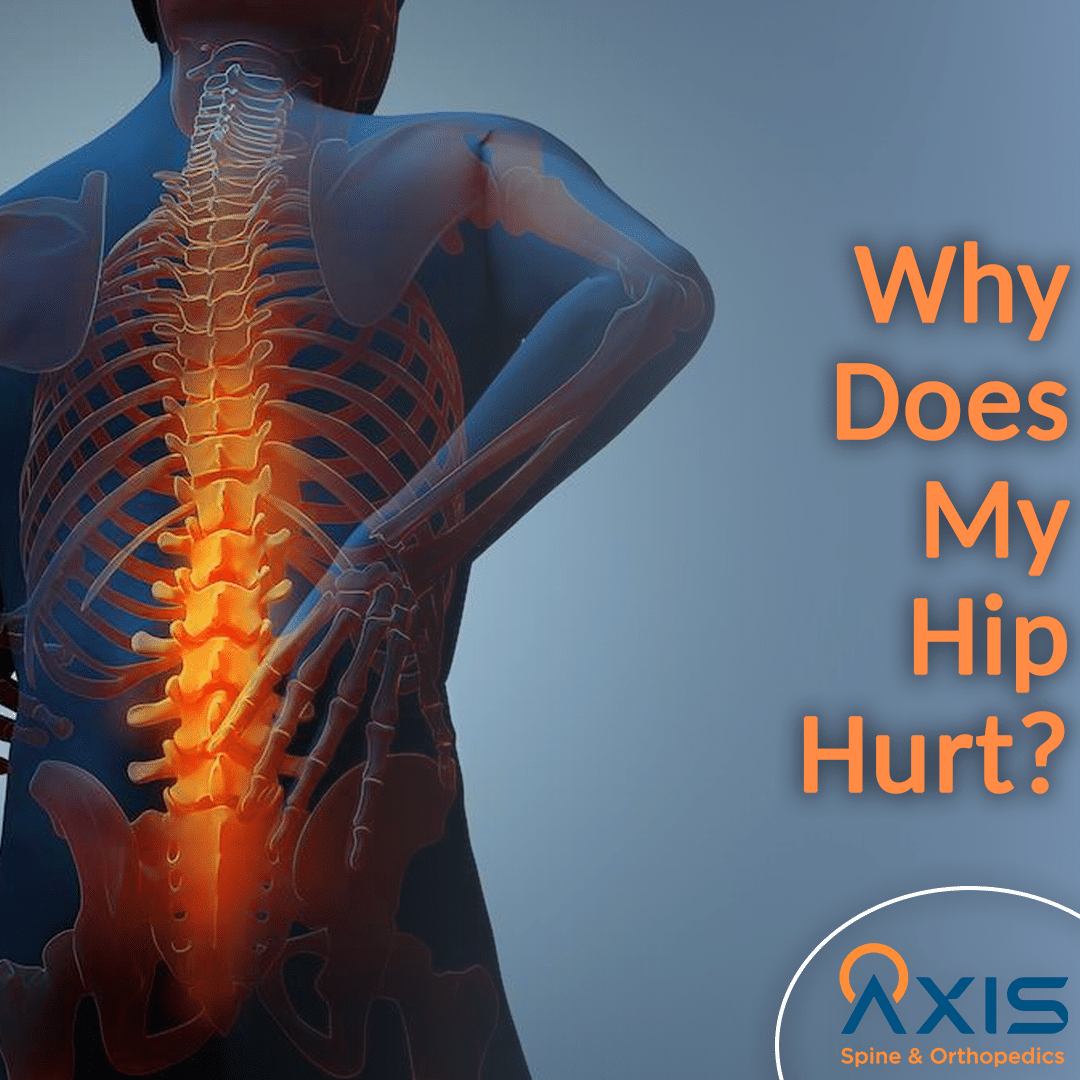
Could your back be the cause of your hip pain? Back pain and hip pain can often be confusing because the nerves traveling from your lower back can cause symptoms to be felt in different areas of the body. In some cases, the root of what feels like hip pain may actually be coming from the lower or mid-back. Common spine-related conditions that can contribute to hip or leg symptoms include herniated discs, sciatica, and spinal stenosis. Problems involving the sacroiliac (SI) joint can also cause pain around the lower back, buttocks, and hip area, which can make it difficult to determine exactly where the pain is coming from.
One way to help recognize the difference between certain types of back-related pain and true hip pain is to pay attention to where the pain is located and what movements make it worse. Pain originating from the back or irritated nerves may become more noticeable when sitting, bending, or twisting. These movements can sometimes cause numbness, tingling, burning, or shooting pain that travels from the lower back into the buttocks, hip, or down the leg. Sciatica is one example of nerve-related pain that can travel along this pathway. A herniated disc can also irritate or compress a nearby nerve and create symptoms that may be felt beyond the actual location of the disc problem.
Hip pain can feel different depending on the underlying cause. A problem originating in the hip joint may feel like a deep ache, stiffness, or discomfort in the groin or front of the hip. It may become more noticeable when walking, climbing stairs, getting in and out of a car, or putting on your shoes. However, symptoms can overlap between the hip and spine, so these differences are not enough to determine the exact cause of your pain on their own.
If you are experiencing persistent hip or back pain, especially if you also have numbness, tingling, weakness, or pain that travels down your leg, it may be time to have your symptoms evaluated. At Axis Spine and Orthopedics, our team can evaluate your symptoms and help determine whether your pain may be related to your spine, hip, or another underlying condition. Understanding the source of your pain is an important first step toward finding the appropriate treatment and getting BACK to It.